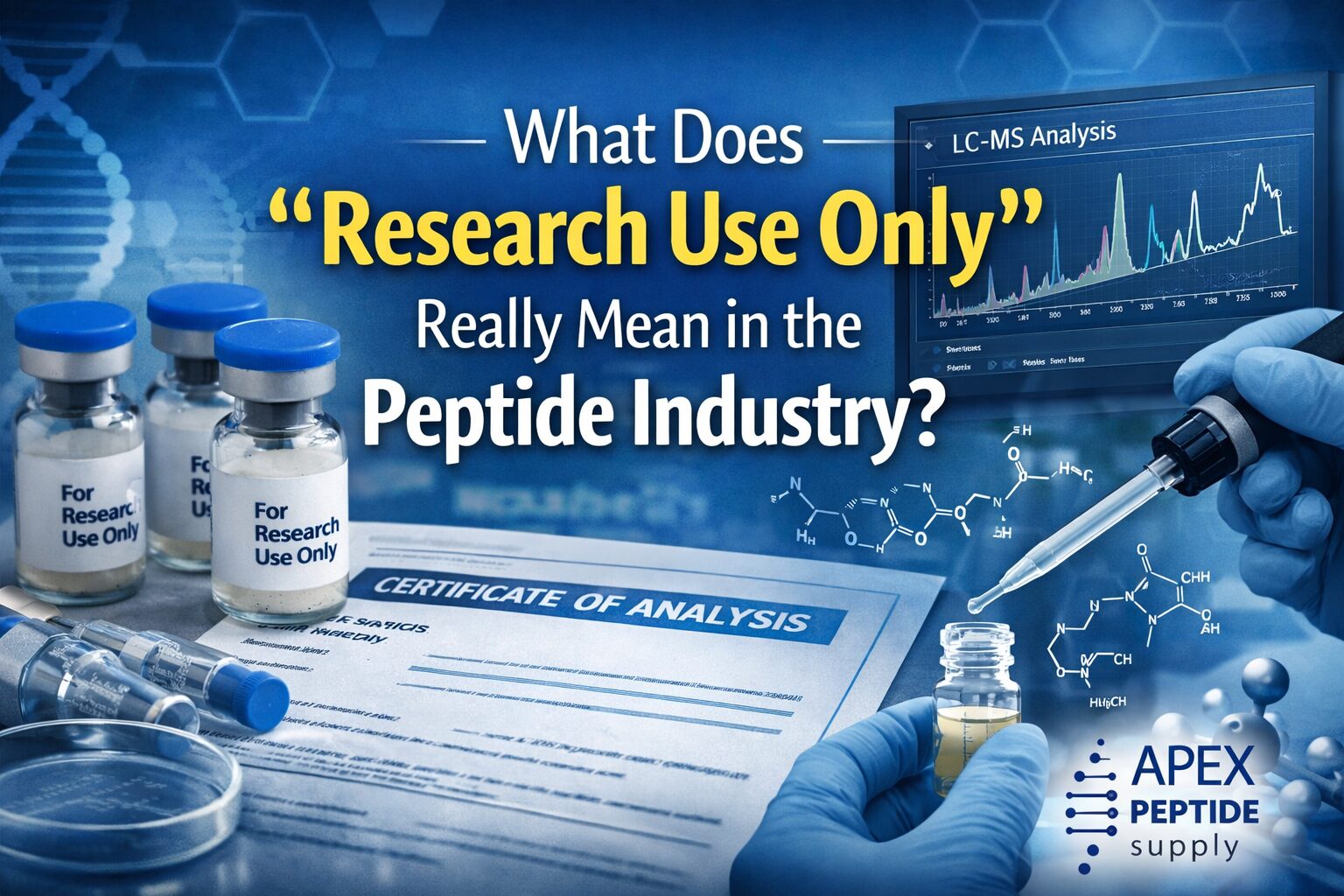
Peptide Testing: Hplc & Mass Specification Pureness Guide Peak
Peptide Screening: Hplc & Mass Spec Pureness Overview Pinnacle
Determining peptide pureness is typically made with analytical high-performance fluid chromatography (HPLC), frequently paired with mass spectrometry (MS) for identification confirmation. These analytical strategies are typical in peptide quality control and you will almost always obtain HPLC and MS information with a study peptide order. The primary analytical methods for peptides include liquid chromatography (LC), usually HPLC, incorporated with mass spectrometry (MS) for accurate molecular weight resolution and sequence recognition.Discover our directory to watch validated study substances and learn more concerning our screening and quality control procedure. Also minor contaminations can alter outcomes, lower reproducibility, or present undesirable variables into a study. Researchers rely on exact, validated compounds to ensure their findings are both legitimate and constant.
Innovative Proteomics is a relied on carrier of proteomics evaluation services. Thanks to our exceptional scientists and powerful mass spectrometry platform, we off gives worldwide client with extensive and specialist peptide pureness analysis solution by using RP-HPLC. If you have any kind of inquiries or certain needs, please feel free to call us.Quality Control For Scientists: Why It Starts With Recognition
With each other, these analytical techniques supply the evidence base for wrapping up that a peptide Analytical Chemistry set is suitable for research study use. One more relevant term you might come across is internet peptide material, which is various from purity. Internet peptide content describes how much actual peptide (by weight) remains in the vial about non-peptide elements like water, counter-ions (e.g., TFA), or barrier salts.- Peptide testing documentation should be interpreted as batch-level analytical evidence for research study material, not as clinical-use permission.
- Explore our brochure to watch verified study substances and learn more concerning our testing and quality control process.
- In COA review, it usually consists of HPLC purity screening, mass spectrometry identification verification, and batch-specific documentation showing the checked lot, approach, results, and day.
- For instance, in order to guarantee success in various peptide experiments, it may be required to eliminate trifluoroacetic acid (TFA), or to assess the solubility of hydrophobic peptides before doing the called for experiments.
- Notably, this purity number is normally determined after filtration (e.g. by HPLC) and focuses on peptide contaminations-- it doesn't count recurring water, salts, or counter-ions in the dried peptide powder.
- A peptide listed at 75% pureness and one at 99% purity aren't just various qualities-- they can generate meaningfully different results in the very same assay.
Either can be acceptable, yet third-party screening is Learn here the gold standard for research-grade products. Residual solvents, such as DMF, acetonitrile, or DMSO, are quantified using gas chromatography (GC) methods. These solvents can affect peptide functionality, so exact quantification is necessary to make sure purity and stop contamination in experimental setups. Peptide stability is evaluated under various problems to ensure integrity throughout research and product advancement.
Encapsulation Efficiency And Drug Loading Analysis
Relied on laboratories employ proven testing methods to examine peptide examples and verify their purity and chemical structure. One core method is High-Performance Fluid Chromatography (HPLC), the gold requirement for analyzing peptide pureness. HPLC separates peptide blends and can discover even small impurities listed below 1% of the sample [4] A regular laboratory will certainly run the peptide with an HPLC system and create a chromatogram-- the main optimal represents the target peptide, and any type of extra optimals indicate other substances. The pureness is after that quantified as the percent of the primary top location versus total locations, providing a specific action of how pure the peptide is [2]
Maintaining a high degree of pureness is important due to the fact that impurities can influence bioassays or reactions. As an example, truncated peptides or chemically changed side-products may bind to targets or generate side effects that amaze your outcomes. Particularly modified peptides or cyclic peptide series are difficult to verify, which affects quality assurance. We combine LC-MS/MS and chemical food digestion analysis to exactly validate the sequence and adjustment websites of non-natural changed peptides. Recurring organic solvents, metal ions, or byproducts from synthesis might cause harmful negative effects.